Does Regular or Goofy Foot Have an Advantage?
Regular Foot and Wave Direction
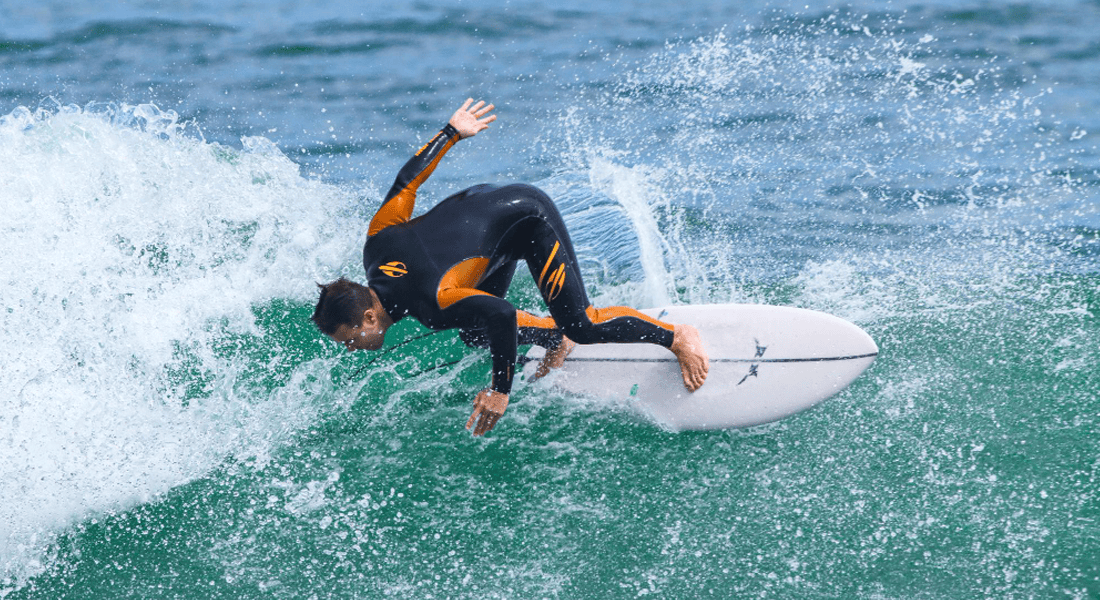
Neither stance has a built-in technical advantage. For a regular foot surfer, a wave breaking to the surfer’s right is typically ridden frontside, with the chest facing the wave, while a left is ridden backside. Some surfers have a directional preference, but learning both frontside and backside surfing is part of becoming more versatile.
Goofy Foot and Wave Direction
For a goofy foot surfer, the orientation is reversed: a left-breaking wave is typically frontside, while a right is backside. This can make certain waves feel more comfortable at first, but it does not make one stance superior. Strong surfers learn to read and ride waves in both directions.
How to Improve Your Surfing Stance
Build Consistent Muscle Memory
Regardless of your natural stance, repetition is essential. Practice a smooth pop-up, balanced foot placement, bent knees, and looking where you want to go. Developing muscle memory helps you spend less attention on where your feet are and more attention on the wave, timing, and line. Our surfing lessons in Waikiki can help reinforce those fundamentals with real-time coaching in the water.
Practice Switch Stance Later
Some experienced surfers practice riding switch, meaning they surf with the opposite foot forward from their natural stance. It is challenging and can be useful for coordination and versatility, but beginners are usually better served by first making their natural stance consistent. Once the fundamentals are solid, switch-stance practice can become an optional progression exercise.
Common Surfing Stance Mistakes to Avoid
Incorrect Foot Placement
One of the most common mistakes is landing with the feet too close together, too far apart, or well off the board’s centerline. As a general starting point, your front foot should land around the middle area of the board and your back foot farther toward the tail, with placement adjusted for the board, wave, and maneuver. Good foot placement supports balance and control.
A Stiff, Upright Posture
Another common mistake is standing stiff and upright. Keep your knees flexed, your body relaxed, and your eyes looking ahead rather than down at your feet. A mobile stance makes it easier to absorb the wave’s movement, shift weight, and adjust your line.
Forcing the Wrong Stance
Do not choose regular or goofy simply because a friend uses that stance or because one seems more common. If your pop-up repeatedly feels awkward, our experienced surf instructors can help determine whether the issue is your stance, your foot placement, or the mechanics of the pop-up itself.
Embrace Your Natural Surfing Stance
Whether you are regular or goofy foot, understanding and embracing your natural stance is an important part of improving your surfing. Neither stance is better. What matters is developing a balanced, repeatable position that gives you control as conditions change. Practice consistently, stay patient, and let good technique become automatic over time.
Determining whether you are regular or goofy foot is one of the first building blocks in your surfing journey. Ohana Surf Project offers personalized private surf lessons as well as group and family options, with coaching designed around your experience, comfort level, and goals. Our instructors can help you refine your pop-up, stance, balance, wave selection, and overall control.
For surfers who want focused one-on-one feedback, private surf lessons provide personalized coaching around individual goals, strengths, and areas for improvement.
If you already surf independently, Ohana Surf Project also offers surfboard rentals in Waikiki, including a range of board types and flexible rental durations. Choosing a board that matches your ability and the day’s conditions can make stance practice more productive and enjoyable.
Ready to find your footing in the water? Explore Ohana Surf Project’s lesson options and learn with a supportive team that can help you turn your natural stance into a stronger, more confident foundation for surfing.
FAQs
What is the difference between regular and goofy foot surfing?
Regular foot surfers ride with the left foot forward and the right foot back. Goofy foot surfers ride with the right foot forward and the left foot back. Neither stance is better; both are normal ways to surf.
Does being right-handed mean I should surf regularly?
No. Handedness does not reliably determine surfing stance. A right-handed person can have a regular or goofy foot, and the same is true for a left-handed person. Choose the stance that feels most natural and repeatable.
How can I tell which surf stance is natural for me?
Your stance in other board sports is a useful clue. You can also try a gentle push test, think about which foot leads when you slide, and practice several controlled pop-ups on land. If the result still feels unclear, an instructor can watch your movement and help you decide.
Should beginners practice switching stance?
Usually not at first. Beginners generally progress faster by developing a consistent pop-up and balanced position in their natural stance. Switch stance can be introduced later as a coordination and versatility exercise.