blog-intro-new-bg-img
Essential Surfing Terms: Your Glossary Of Surf Slang Essential Surfing Terms: Your Glossary Of Surf Slang
Blogs

Essential Surfing Terms: Your Glossary Of Surf Slang

When you’re learning to surf, the ocean comes with its own language. Understanding surfing terms can make your experience safer, more fun, and more rewarding. From paddling out to catching your first wave, knowing the lingo helps you communicate with instructors, fellow surfers, and the waves themselves.

Beginners and intermediate surfers benefit from learning the vocabulary used in the lineup. A strong grasp of surfing terms helps riders follow instructions, understand wave conditions, and connect more naturally with the surf community.

Surfboards and Equipment

Before hitting the waves, it’s important to know the names of your tools. Surfboards come in a variety of shapes and sizes, each designed to suit different skill levels and styles of riding. A shortboard is a smaller, lightweight option that allows for speed and maneuverability, often used for performing advanced tricks.

In contrast, a longboard offers greater stability and is ideal for beginners or surfers who enjoy a smoother, cruising style. For those transitioning from beginner to intermediate, a funboard — or mini-mal — offers a balance of stability and agility, making it easier to progress.

Other key equipment includes the leash, which connects your board to your ankle so it stays nearby if you fall, and fins, which are located on the underside of the board and provide stability and control while riding waves. Wax applied to the deck helps your feet grip the board, preventing slips as you stand and maneuver.

Surfers often wear a rash guard to protect against chafing from the board or sunburn during extended sessions.

Waves and Ocean Terms

Surfing depends heavily on understanding the ocean. Several surfing terms describe how waves behave and where surfers position themselves. One key term is the break, which describes the location where a wave begins to curl and collapse.

Breaks appear in several forms. A point break forms when waves wrap around a headland. Reef breaks occur when waves rise over a coral or rock reef. Beach breaks develop when waves crash over sandbars along the shoreline. Each type creates different riding conditions.

Surfers also watch sets, which refer to groups of waves arriving together in patterns. Observing sets helps riders decide when to paddle out or which wave to choose.

A green wave refers to an unbroken wave face that remains smooth and rideable. Whitewater describes the foamy section that forms after a wave breaks. Beginners often practice in whitewater first because it feels more forgiving.

Surfers gather in a zone called the lineup while waiting for waves. Respecting other riders in this area remains an important part of surf culture. Dropping in happens when a surfer catches a wave already being ridden by someone else. This action breaks surf etiquette and should be avoided.

Another helpful term is peeling. A peeling wave breaks gradually from one side to the other, creating a longer and smoother ride.

Learn More About Us
Essential Surfing Terms: Your Glossary Of Surf Slang Essential Surfing Terms: Your Glossary Of Surf Slang

Maneuvers and Riding Techniques

As you become more comfortable in the water, learning the common maneuvers and techniques will enhance your experience. The pop-up is the foundational movement, where a surfer goes from lying on the board to standing. Once standing, surfers can perform a bottom turn, redirecting the board at the base of the wave to position themselves for additional maneuvers along the face.

The cutback is another key movement. This allows the surfer to change direction and stay near the breaking part of the wave, maintaining speed and control.

More advanced techniques include riding the tube or barrel, the hollow part of a wave as it curls over, which many surfers consider the pinnacle of thrill and skill. A floater involves riding on top of the broken part of the wave, useful for navigating crowded areas or whitewater sections.

Carving refers to a smooth, arcing turn along the face of the wave, blending technical skill with fluid expression.

Advanced Surf Slang

Surfers often use slang to describe wave shapes and riding conditions. An A-frame wave forms a peak that breaks evenly in both directions. This shape resembles the letter “A” and creates two potential riding paths.

A closeout occurs when the wave breaks along its entire length at once. This type of wave leaves little room for riding along the face.

The phrase dropping in describes the moment a surfer commits to a wave and begins the ride, often when another surfer has already started riding the wave. Context usually clarifies the difference between etiquette violations and normal takeoffs.

Other expressions appear frequently in the lineup. A line ride describes traveling along the open face of a wave for as long as possible. Off the lip refers to turning sharply at the top of the wave before descending back down the face.

Surf Etiquette and Safety Terms

Surfing is not just about riding waves; it’s about respecting the ocean and those around you. Priority, or right of way, dictates that the surfer closest to the peak of the breaking wave has precedence. Mushy waves are weak waves with little power, often perfect for beginners to practice safely.

Wipeouts are inevitable for surfers of all levels, and knowing how to fall safely is crucial to prevent injury. Techniques such as the duck dive help you get under oncoming waves while paddling out, and channels provide safer pathways through the surf to reach the lineup.

Cultural and Regional Surf Terms

Surfing has a rich cultural heritage, particularly in Hawaii, and learning regional terminology can deepen your connection to the sport. The traditional Hawaiian term for surfing, heʻe nalu, literally means “wave sliding” and reflects the spiritual and historical significance of the practice.

Aloha, in addition to being a greeting, represents respect, friendliness, and a positive attitude toward others in the water. The shaka hand gesture, with thumb and pinky extended, conveys a relaxed “hang loose” or good vibes.

How Ohana Surf Project Can Help

We know that learning surfing terms while mastering the waves can feel overwhelming, especially for first-timers. That’s why we provide personalized lessons where every term, technique, and maneuver is explained clearly and practiced in a supportive environment.

Booking a lesson with us gives you hands-on experience while connecting you to Hawaii’s rich surfing heritage. Book your surf lesson with us and ride the waves with confidence in every session today!
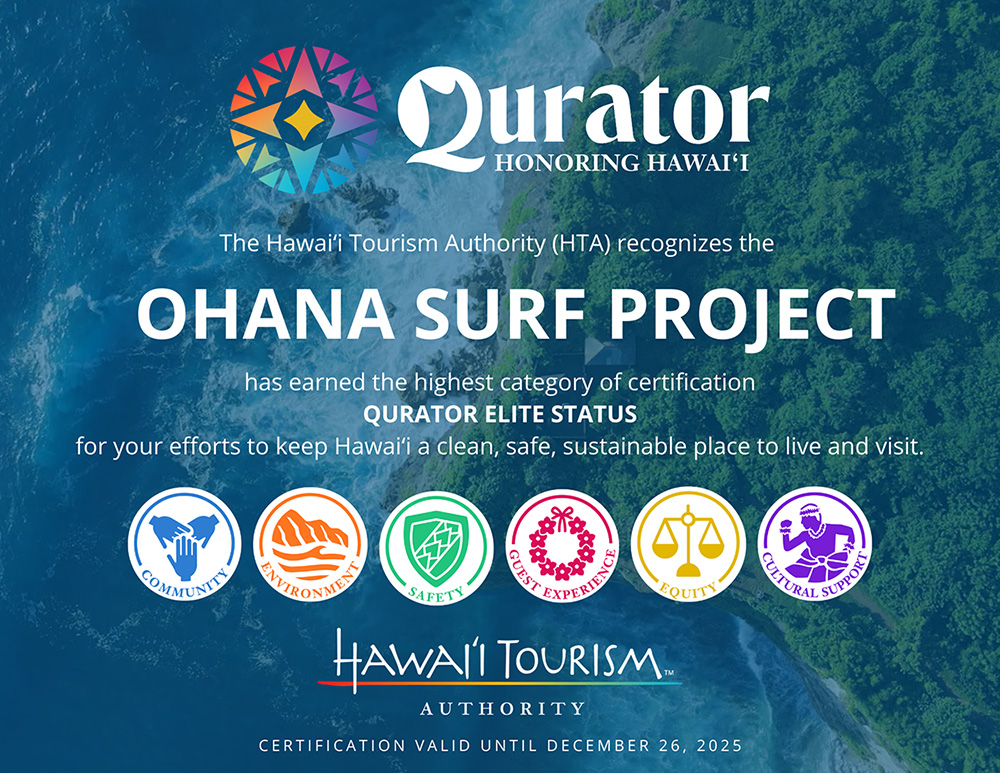
This certification puts Ohana at the top — not just for surf, but for how we show up for Hawai‘i every day. View Certificate
BLOGS

OTHER OSP BLOGS

Windsurfing Vs. Surfing: What Sets Them Apart?

Windsurfing Vs. Surfing: What Sets Them Apart?

Surfing vs. windsurfing both involve riding the ocean’s waves, but the experiences, techniques, and challenges they offer are quite distinct. For those drawn to the water, understanding these differences can[...]
1 min read
1