Quick Summary

Applying wax to a bodyboard improves traction, helping riders maintain control and stability in wet conditions. Wax is typically applied to key contact areas such as the nose, rails, and deck to prevent slipping during maneuvers. The effectiveness of waxing depends on proper application techniques and choosing the right wax for the water temperature. Maintaining and reapplying wax as needed supports consistent performance and handling in the water.

blog-intro-new-bg-img
Bodyboard Waxing: Is It Necessary For Optimal Performance? Bodyboard Waxing: Is It Necessary For Optimal Performance?
Blogs

Bodyboard Waxing: Is It Necessary For Optimal Performance?

The ocean is a dynamic environment where water creates a slick surface on almost everything it touches. For a bodyboarder, this slickness is the enemy of precision. But why wax a bodyboard?

The answer lies in the physics of friction. Without a tacky surface, your chest and hands would slide right off the smooth foam deck the moment you try to bottom turn or launch into the air. Wax provides that connection between your body and the equipment, allowing you to focus on the line you are drawing across the wave face rather than struggling just to stay on top of the board.

For those just starting out, the learning curve can be steep, and having the right gear makes a world of difference. At Ohana Surf Project, we see many newcomers arrive with brand-new boards that are still shiny and slippery from the factory.

Taking the time to prep your equipment is just as important as learning the physical mechanics of the sport. If you are not yet ready to invest in your own gear, our bodyboard rentals offer a great way to test out professional-grade equipment that is already properly maintained and waxed for local conditions.

Why Wax a Board

Before getting into the specific mechanics of the sport, it is helpful to understand the basic necessity of surface traction for all types of wave riding. Adding this layer of grip transforms a slick piece of equipment into a reliable tool that responds to your every movement in the water.

Enhancing Grip for Better Control

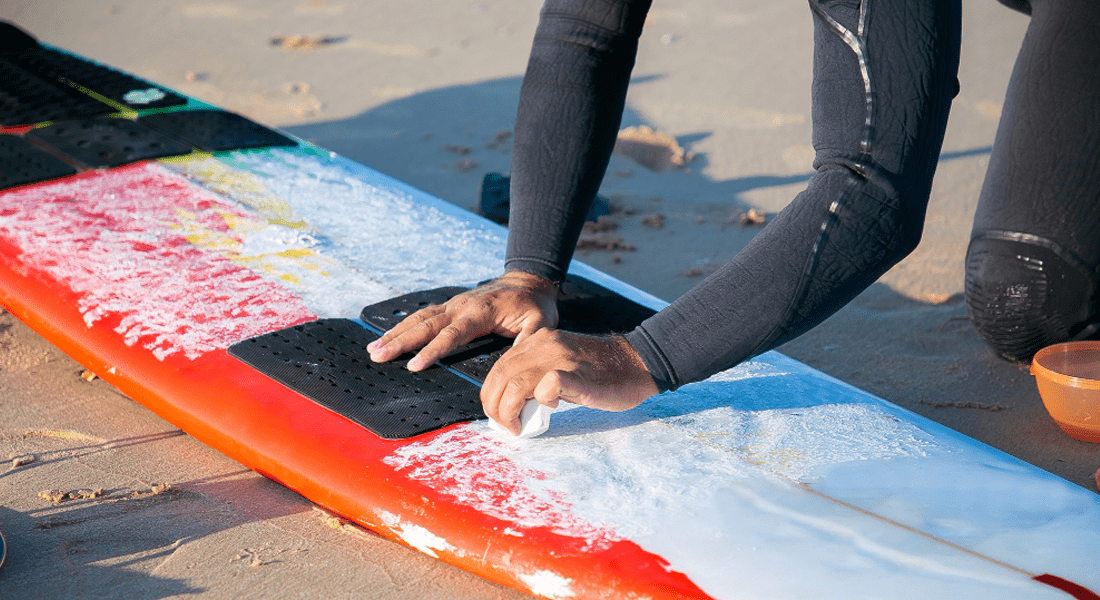
The primary reason riders use wax is to create traction. Unlike a surfboard, where wax is applied mainly where the feet stand, a bodyboard requires wax in specific contact zones.

These usually include the nose where your hands grip, the rails where your forearms rest, and the belly area of the deck. When the board is dry, the foam might feel like it has enough grip, but once it is submerged in salt water, it becomes remarkably slippery.

If you are looking to refine your technique and understand these nuances better, signing up for bodyboarding lessons can provide you with hands-on guidance. Professional instructors can show you exactly where your body weight should be distributed and how the wax helps maintain that positioning during a heavy set.

Improving Longevity and Performance

While deck skins have improved, they are still designed to be non-abrasive to prevent "board rash" on your skin. This softness inherently means they lack the aggressive grip needed for high-performance riding.

Applying a thin, even layer of wax helps you maintain a consistent "sweet spot" on the board. Over time, you will notice that your muscle memory improves because you aren't constantly adjusting your torso to compensate for slipping.

Learn More About Us
Bodyboard Waxing: Is It Necessary For Optimal Performance? Bodyboard Waxing: Is It Necessary For Optimal Performance?

Should You Wax a Boogie Board for Every Session?

A common point of confusion for casual beachgoers is whether you should wax a boogie board every single time you hit the water. The answer depends on the water temperature and how much of the previous layer has rubbed off.

Wax is formulated for specific temperatures: tropical, warm, cool, or cold. Using the wrong temperature wax can result in it either melting off too quickly or becoming too hard to provide any tackiness. Generally, you only need to "top up" the existing layer with a light application before a session rather than stripping it down to the foam every time.

Smart Habits for Effective Waxing

To get the most out of your session, follow these simple habits for a better grip:

  • Focus on the corners near the nose where your hands stay during a climb.
  • Avoid waxing the underside or slick of the board, as this will create drag and slow you down.
  • Cross-hatch your application by rubbing the wax in diagonal lines to create small bumps for maximum traction.
  • Store your board in a cool place or a board bag to prevent the wax from melting into a mess in your car or on the sand.

Master the Waves with Confidence

Mastering the ocean requires a blend of physical skill, mental focus, and the right preparation. Whether you are a seasoned pro or a first-timer, signing up for professional bodyboarding lessons is the first step toward a successful day in the water. By taking care of the small details, you free yourself to enjoy the essential magic of the waves.

Get in touch today to book a session or ask any questions and start your bodyboarding journey with the right foundation.

FAQs

What happens if I use the wrong temperature wax?

If you use cold-water wax in tropical conditions, it will become too soft and smear off the board almost immediately, leaving you with a greasy mess and no grip. Conversely, using tropical wax in cold water will cause the wax to become brittle and hard, failing to provide the tacky surface needed for your hands and chest to stay in place.

Where exactly should I apply the wax on my bodyboard?

Focus on the areas where your body makes the most contact. This includes the top two corners (the nose), the sides (the rails) where your forearms rest, and the middle area of the deck where your stomach and chest sit. Avoid waxing the bottom of the board, as the "slick" needs to stay smooth to glide over the water at high speeds.

How often should I remove the old wax?

You should strip the wax off your board if it becomes dirty, loses its tackiness, or if you are traveling to a location with a significantly different water temperature. Using a plastic wax comb or a specialized remover allows you to start with a fresh surface so that the new layer adheres properly to the foam deck.


This certification puts Ohana at the top — not just for surf, but for how we show up for Hawai‘i every day. View Certificate
BLOGS

OTHER OSP BLOGS

Is It Actually Possible To Surf On A Bodyboard?

Is It Actually Possible To Surf On A Bodyboard?

Bodyboarding and surfing share core wave-riding principles, and it is possible to apply surfing-style maneuvers on a bodyboard by using its buoyancy, rails, and positioning techniques. While bodyboarding is typically[...]
1 min read
1
Is Bodyboarding Simpler Than Surfing In Hawaii?

Is Bodyboarding Simpler Than Surfing In Hawaii?

Bodyboarding is often easier for beginners in Hawaii because it does not require the pop-up and standing balance needed in surfing, allowing riders to experience waves from a stable prone[...]
1 min read
1
Can You Really Bodyboard Without Fins?

Can You Really Bodyboard Without Fins?

Swim fins are an essential tool for bodyboarding, providing propulsion, control, and safety when riding waves. While finless bodyboarding is possible in small, shallow conditions, it significantly reduces speed, stability,[...]
1 min read
1