5. Master The Sweep Stroke for Smoother Turns
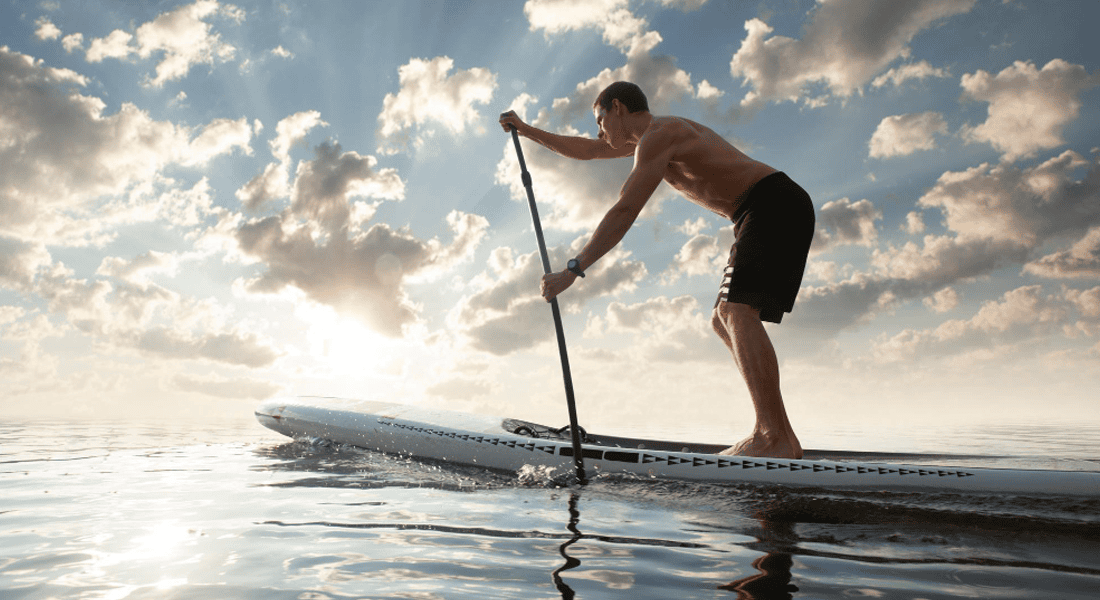
A sweep stroke turns your board with a wide, flowing motion instead of quick, choppy corrections. Place the paddle near the nose, then sweep the blade outward in a large arc toward the tail. Let your shoulders, torso, hips, and knees join the motion, rather than reaching with your arms alone. The wider the arc, the more turning power you create. A forward sweep turns the board away from the paddle side. A reverse sweep can slow your movement and guide the board back. Good sweep strokes make your turns look calm, clean, and confident.
6. Learn The Step Back Turn for Sharper Direction Changes
The step back turn is one of the most exciting SUP skills to practice once your balance feels steady. Move one foot back toward the tail, bend your knees, and keep your eyes looking where you want to go. As weight shifts back, the nose lifts slightly, which helps the board pivot faster. Use a sweep stroke to guide the turn while your core stays active. Start on flat water, and practice small weight shifts before stepping farther back. Falling is part of the lesson, so smile, climb back on, and try again with softer knees and a lighter mindset.
7. Improve Your Stance, Balance, and Board Movement
Advanced paddling asks your feet to become more active. A neutral stance is great for straight paddling, but turns, bumps, and small waves often call for subtle movement. Keep your knees soft, your chest lifted, and your weight centered over the board. Try shifting one foot slightly back, then return to center without looking down. This builds trust in your balance and board feel. As you improve, practice slow steps, gentle pivots, and relaxed recoveries. The board responds best when your body stays loose, alert, ready, and steady while turning in light chop with control.
8. Read Water Conditions Before Pushing Your Limits
Strong technique loses value when you ignore the water around you. Before paddling farther or trying harder turns, study wind direction, surface texture, current, tide, waves, reef areas, and nearby beach traffic. Conditions can change quickly, especially in open ocean settings. Pick a route that matches your skill level, and leave enough energy for the paddle back. Watch how other paddlers move through the same area. If the water feels stronger than expected, adjust early. Smart paddlers build confidence through awareness, patience, ocean respect, and calm judgment. That awareness keeps progress steady and sessions fun.
Keep Riding Better with Ohana Surf Project
Advanced stand up paddle boarding becomes more rewarding when each movement feels intentional. Clean strokes, steady footwork, sharper turns, and better water awareness all work together to help you paddle with control. The more you practice with patience, the more your board starts to feel like a natural part of your ocean rhythm.
At Ohana Surf Project, we help you build that skill through organized, professional, high quality stand up paddleboarding lessons on Oahu. Our experienced instructors focus on your comfort, technique, timing, balance, and confidence in real water conditions. You can also rent boards from us for extra practice, then add photos to remember your best moments on the water.
Book your stand up paddleboarding lesson or rental with us today, and let our ohana help you ride smoother, turn smarter, and enjoy every paddle.
FAQs
What is the best stand up paddle board technique to improve first?
Start with your forward stroke since it affects speed, balance, and control. Use your core instead of only your arms, keep the blade close to the board, and pull with smooth rhythm. A cleaner stroke helps you travel straighter, save energy, and build a stronger base for turning skills and advanced board movement.
How do I turn a paddle board more smoothly?
Use a sweep stroke when you want a wide, controlled turn. Place the paddle near the nose and move the blade in a large arc toward the tail. Rotate your torso as you paddle, and keep your knees soft. This helps the board turn with less wobbling and fewer rushed corrections.
When should I try advanced SUP techniques?
Try advanced techniques once you can stand, paddle forward, stop, and turn with steady control in calm water. Start with small adjustments before moving into stronger strokes or step back turns. You should also check wind, current, waves, and traffic around you, so each practice session stays safe, productive, and fun.